Recycling and Sustainability at Abbey Wood Storage
 Abbey Wood Storage is committed to helping customers choose a more responsible way to store their belongings, with a clear focus on recycling, reuse, and lower-carbon operations. Our approach to storage sustainability is built around practical steps that reduce waste, improve material recovery, and support cleaner local logistics. We aim for a minimum recycling rate of 95% across our general waste streams, with continuous review to push that figure higher wherever local infrastructure allows. By separating recyclable materials carefully and working with trusted local partners, we make it easier for items to stay in circulation for longer and for waste to be handled in the most environmentally sound way possible.
We understand that effective storage recycling depends on simple, consistent systems. That is why our team prioritises the sorting of cardboard, hard plastics, paper, metal packaging, and other commonly recovered materials. In areas where local boroughs promote strict waste separation, we align our own processes with those expectations so that recyclable materials are placed into the right streams from the outset. This includes keeping mixed waste to a minimum and ensuring that items suitable for recovery are not sent unnecessarily to landfill. The goal is to make green storage a natural part of day-to-day operations rather than an afterthought.
We also work with nearby transfer stations and waste handling facilities that can process segregated materials efficiently. These local links help reduce unnecessary travel and support better routing of waste vehicles.  Using local transfer stations means recyclable loads can be consolidated close to where they are produced, which lowers emissions and improves collection efficiency. It also allows us to respond to changing local recycling requirements, including borough-specific approaches to the separation of glass, paper, food waste, and dry mixed recyclables. By keeping our disposal chain short and well managed, Abbey Wood Storage supports a more circular approach to waste.
Partnerships That Support Reuse and Community Value
Another important part of our Abbey Wood recycling and sustainability commitment is our work with charities and community organisations. Where suitable, we help direct usable furniture, office items, and household goods towards charitable reuse rather than disposal. These partnerships give items a second life and can support local causes at the same time. We place emphasis on items that still have good value, such as shelving, desks, chairs, and storage containers, because reuse is often the most sustainable outcome of all.
We recognise that not everything can be recycled, but many items can be repurposed through donation or specialist recovery routes.  For example, some packaging materials can be baled and reused in manufacturing, while wooden items may be directed toward recovery channels where they are chipped or reprocessed. In boroughs where waste separation is particularly well established, residents and businesses are already used to sorting materials into distinct categories, and we support that wider culture by reinforcing careful segregation on site. This helps ensure that our storage sustainability practices remain consistent with local expectations and environmental standards.
Our charity partnerships also help reduce the environmental impact of clear-outs and transitions. When customers move, downsize, or reorganise their space, perfectly usable items can often be diverted away from disposal. Rather than treating every item as waste, we look for reuse-first opportunities that benefit the community and reduce the demand for new products. This is an important part of sustainable storage, because the greenest item is often the one that never needs to be replaced.
Cleaner Transport with Low-Carbon Vans
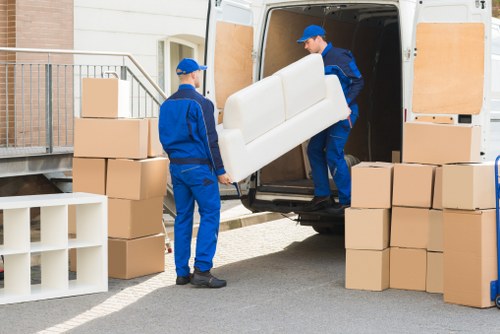
Transport is another area where we have made meaningful changes. Our operations increasingly use low-carbon vans and fuel-efficient vehicles to support local collections and deliveries.  These vehicles are chosen to reduce emissions during everyday journeys and to improve efficiency on routes that serve multiple customers in the same area. By investing in cleaner transport, Abbey Wood Storage lowers the environmental impact associated with moving goods, waste, and recovered materials. This is especially valuable in urban areas where short trip frequency can add up to a significant carbon footprint if conventional vehicles are used.
We also review route planning to minimise empty miles and avoid unnecessary travel. Combining deliveries, collections, and waste movement where practical helps us make better use of each journey. This careful planning supports our wider recycling strategy, because it means recyclable loads can be moved efficiently to the right local facilities without excess fuel use. In a district where boroughs may manage waste separation in different ways, flexibility is essential. We adapt to those differences while keeping our own standards high, ensuring that recycling, reuse, and recovery remain central to how we operate.
Our sustainability efforts extend beyond vehicles and waste streams. We encourage the responsible use of packing materials, favouring recyclable or reusable options where possible, and we work to reduce avoidable waste generated by operations. Cardboard, paper, and stretch wrap are sorted carefully, while larger materials are assessed for recovery, donation, or specialist processing. This approach reflects a broader commitment to Abbey Wood Storage recycling practices that are practical, transparent, and designed to make a measurable difference over time.
 Looking ahead, we are focused on strengthening our recycling percentage target, expanding reuse partnerships, and continuing to improve our fleet of lower-emission vehicles. Sustainability is not a single project; it is an ongoing part of how Abbey Wood Storage works. By combining local transfer stations, charity partnerships, waste separation awareness, and low-carbon vans, we are building a more responsible storage service for customers and for the communities we serve. Our aim is simple: keep useful materials in use for longer, reduce waste wherever possible, and support a cleaner future through everyday action.